



20th June 2025BY Nihang Law
Understanding the Agreement of Purchase and Sale in Plain Language
Last Updated: March 2026
QUICK ANSWER
An Agreement of Purchase and Sale is the contract that sets your price, deposit, conditions, deadlines, and what happens if the deal doesn’t close. Most legal “pain” comes from missed dates, unclear inclusions (fixtures or chattels), and weak conditions.
Before you sign, confirm the deal terms, build in the right conditions, and understand what’s truly “your risk” versus what can be fixed through lawyer review. Condo and new-build deals have extra rules (including cooling-off rescission rights and new-home warranty or deposit protection frameworks).
If you’ve ever felt pressured to “just sign” because another buyer is waiting, you’re not alone. In Ontario, the Agreement of Purchase and Sale is not a formality. It’s the roadmap and the rulebook for your entire transaction. Once you are firm (or your conditions expire), the consequences of a surprise can be expensive: a deposit dispute, a rushed closing, unexpected taxes, or discovering too late that something you assumed was included actually wasn’t.
The good news is that most of these risks are avoidable if you know where deals typically go wrong and which clauses deserve real attention. This guide breaks the APS down into plain English so you can spot deadlines, protect yourself with the right conditions, and know when to call your real estate lawyer before you commit.
Legal disclaimer: This article is general legal information for Ontario only and is not legal advice. Every Agreement of Purchase and Sale (APS) is different, and your rights may depend on the exact wording, schedules, and facts.
Quick Start: Pick Your Situation
If you’re a buyer (resale)
- Confirm price, deposit amount, and deposit deadline
- Add the right conditions (financing, inspection, lawyer review) with realistic timelines
- Clarify fixtures/chattels and rentals (hot water tank, HVAC, appliances)
- Understand closing costs (especially land transfer tax)
If you’re a seller (resale)
- Confirm deposit handling, closing date, and what stays/goes
- Watch for open-ended conditions or vague schedules
- Make sure representations match reality (zoning/use, renovations, rentals)
If you’re buying a condo
- Add a status certificate review condition (resale)
- For pre-construction, understand the 10-day rescission/cooling-off window and disclosure package timing
Helpful Ontario sources on condo disclosure/cooling-off: Condominium Act, 1998 and the Condo Buyers’ Guide (CAO)
If you’re buying new-build/pre-construction (freehold or condo)
- Confirm the builder is licensed and the home is enrolled in Ontario’s new-home warranty system; deposit protection rules can differ from resale.
- Tarion deposit protection applies to new homes (not resale) and is part of Ontario’s statutory framework. See: Tarion deposit protection overview and HCRA licensing overview
If you’re doing commercial
- Confirm HST language, due diligence scope, and what “as-is” really means
- Ensure timelines cover financing, environmental, leases, and closing logistics
What is an Agreement of Purchase and Sale?
The Agreement of Purchase and Sale is the binding contract for your real estate deal: it sets the price, deposit, conditions, deadlines, and remedies if the deal fails. It becomes enforceable once accepted and delivered, and it can become “firm” once conditions are waived/fulfilled by their deadlines. After that, backing out can trigger deposit and damage claims.
In plain terms: the APS is not “paperwork for the lawyer.” It’s the legal agreement that courts look at if there’s a dispute. Even small wording changes in schedules can shift thousands of dollars of risk.
Ontario’s real estate services framework is regulated under the Trust in Real Estate Services Act (TRESA). RECO explains the consumer context here: RECO – TRESA explained.
What Are The Deal Terms You Should Verify First Before You Sign?
Start with the “big five”: purchase price, deposit (amount + deadline + holder), closing date, conditions (what they are and when they expire), and what’s included/excluded (fixtures, chattels, rentals). If any of these are unclear, you’re signing into future conflict—because the APS will usually control over “what you thought was agreed.”
A practical way to review is “top-down”:
- Price & deposit: Are the numbers correct, and does the deposit timing work with your banking?
- Closing date: Is it realistic for financing, title work, and moving logistics?
- Conditions: Are they specific, with a clear deadline and clear method of notice?
- Schedules: Don’t ignore them—many important promises live in Schedule A or addenda.
- Special circumstances: tenant-occupied property, assignments, or chattels with serial numbers.
What Does “Deposit” Mean in Ontario, and Where Does It Go?
A deposit is not the same as your down payment. It’s “good faith” money paid early and usually held in trust by a deposit holder (often a brokerage) and later credited toward the purchase price on closing. If a buyer defaults after becoming firm, the deposit is often at risk of forfeiture, depending on the contract and facts.
In many Ontario agreements, the deposit clause will state the deposit is held in trust by the deposit holder and delivered quickly after acceptance.
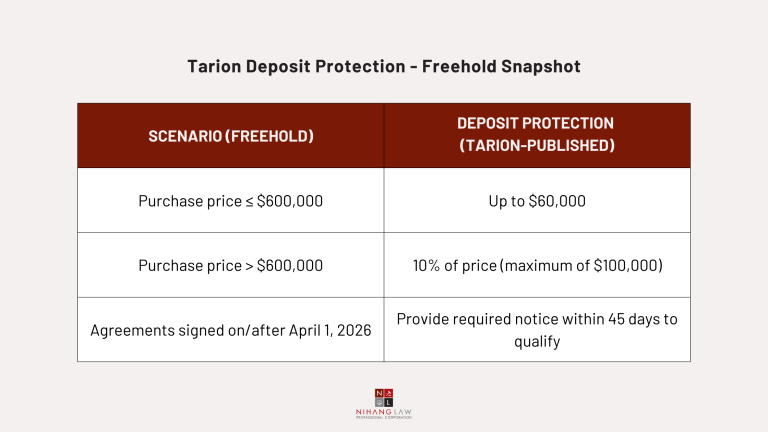
New-Build or Pre-Construction Note (Tarion)
Tarion deposit protection is relevant only to new homes (pre-construction/new build), not resale transactions. It is part of Ontario’s statutory new-home warranty framework.
See Tarion’s deposit protection overview and the HCRA licensing overview.
Figure 1: Tarion Deposit Protection Snapshot
How Do Conditions and Deadlines Work in An Ontario APS?
Conditions are your contractual “escape hatches,” but only if they’re drafted clearly and used on time. Each condition should state what must happen (e.g., financing approval), the deadline, and how you give notice of waiver or non-fulfillment. If the deadline passes without proper notice, you can accidentally become firm—or accidentally kill your deal.
Common buyer-side conditions include:
- Financing approval
- Home inspection
- Lawyer review
- Status certificate review (condo resale)
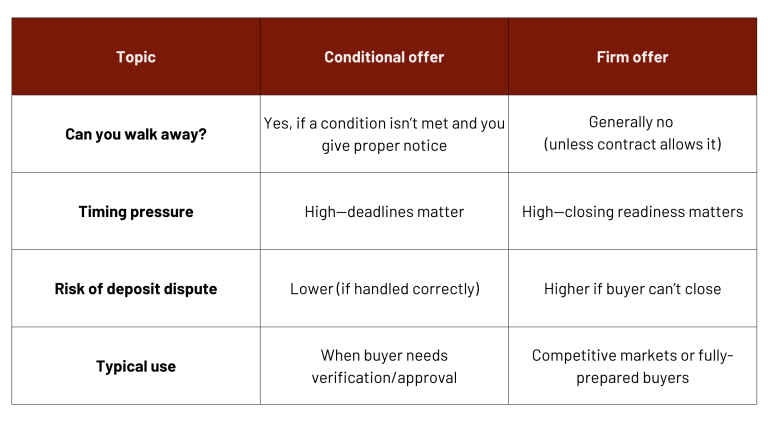
Here’s a simple comparison that clients may find helpful:
What are “Fixtures,” “Chattels,” and “Rental Items,” and Why Do They Cause Fights?
Fixtures are items attached to the property (often considered part of the real estate), while chattels are movable items. Rental items are separate: you may be required to assume a contract (like a hot water tank rental) if the APS says so. Disputes happen when listings are vague or when the APS doesn’t match what the parties assumed.
Practical tip: if it matters to you, list it specifically (include the model or serial number if possible) rather than relying on “as seen.”
What Extra Rules Apply to Condos and Pre-Construction Purchases in Ontario?
Condo purchases, especially pre-construction, come with an expanded disclosure package and a statutory cooling-off rescission window. Under Ontario’s condominium framework, purchasers generally have a 10-day cooling-off period tied to receiving the APS and required disclosure/guide materials. That’s the time to review documents and get legal advice before committing.
Key Ontario references: Condominium Act, 1998 and the CAO Condo Buyers’ Guide (PDF).
What Costs and Taxes Should You Plan for Even if They Aren’t In the APS?
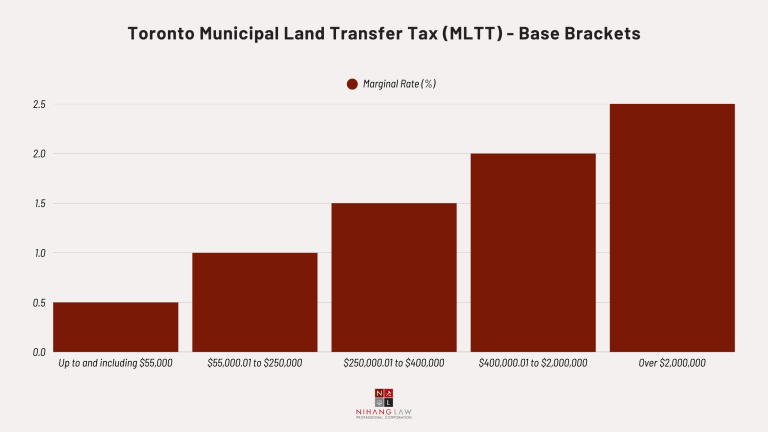
Even if the APS doesn’t list every dollar, you should budget for land transfer tax, legal fees/disbursements, title insurance, and typical adjustments (property taxes, utilities, and condo fees). In Toronto, there’s a separate municipal land transfer tax on top of Ontario’s tax. Foreign buyer taxes (NRST) may apply in specific situations.
Helpful official references: Ontario land transfer tax (LTT), Toronto MLTT, and Ontario NRST.
Figure 2: Ontario Land Transfer Tax Marginal Brackets
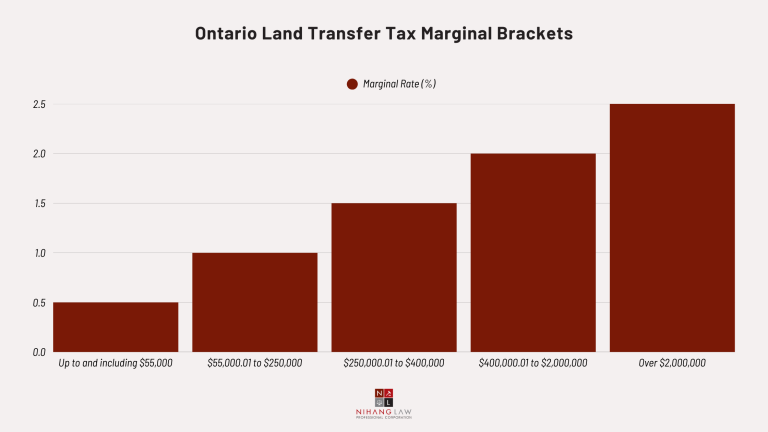
Figure 3: Toronto Land Transfer Tax (MLTT) – Base Brackets
What Happens If Someone Can’t Close on the Closing Date?
A missed closing can trigger default consequences: the buyer may lose the deposit and face damages; the seller may face claims if they can’t deliver title or possession as promised. Remedies depend on the APS wording and the facts. Courts may treat real estate remedies differently from ordinary contracts, but specific performance is not automatic.
Two helpful legal anchors from the Supreme Court of Canada:
- Semelhago v. Paramadevan (specific performance is not automatic).
- Southcott Estates Inc. v. TCDSB (mitigation can matter in damages claims).
Nihang Law Insight
Most “failed closing” files aren’t caused by one big surprise—they’re caused by a chain of small misses: unclear condition wording, unrealistic timelines, late financing documents, or last-minute disagreements over what stays. Treat APS deadlines as immovable, and escalate early when something feels off.
Fraud reminder: wire-fraud attempts targeting real estate closings are a known risk. See: practicePRO guidance on wire-fraud scams.
What are the Usual Steps From Offer to Closing in Ontario?
Most Ontario deals follow the same backbone: offer → acceptance → deposit delivery → conditional period (if any) → lawyer’s title/due diligence work → financing completion → closing funds and registration → possession.
Your main responsibility is to meet deadlines and deliver documents early, because the APS timelines don’t pause for administrative delays.
Step-by-Step Roadmap:
- Offer drafted (price, closing, conditions, schedules)
- Acceptance and delivery (the deal is formed)
- Deposit delivered to the deposit holder per the APS
- Conditional period (inspection/financing/status certificate/lawyer review)
- Lawyer due diligence (title search, requisitions, closing documents)
- Financing finalization (lender instructions, insurance, appraisal if required)
- Closing (funds, registration, keys/possession)
What are the Most Common APS Mistakes We See in Ontario?
Most APS problems come from avoidable ambiguity: vague inclusions, missing rental assumptions, weak conditions, or deadlines that don’t match reality. The APS is a contract. So if it isn’t written down clearly, you may be arguing later about what was meant. A careful review before signing is usually cheaper than litigation after.
Common Mistakes:
- Treating a “lawyer review” as automatic protection without a clear condition and deadline
- Listing inclusions vaguely (“all appliances”) without specifics
- Forgetting rental items (hot water tank, HVAC) and getting stuck assuming a contract
- Accepting an unrealistic closing date without a plan for financing and documents
- Using conditions that are too short to be meaningful (or too vague to enforce)
- Ignoring condo status certificate review (or not giving enough time)
- Not budgeting for land transfer tax and closing adjustments
Frequently Asked Questions
Can I cancel an APS in Ontario after I sign it?
Usually not once the deal is firm. If your offer is conditional, you may be able to walk away by properly not fulfilling a condition within the deadline (and giving proper notice). Some condo pre-construction purchases have a statutory cooling-off rescission period tied to receiving disclosure materials. Always check the exact APS wording.
Related source: Condominium Act, 1998.
Is a real estate deposit refundable in Ontario?
Sometimes. If the APS ends properly during a conditional period (for example, a condition isn’t met and notice is given), the deposit is commonly returned. If a buyer defaults after going firm, the deposit is often at risk of forfeiture depending on the contract and circumstances, and deposit disputes can become litigation quickly.
What is a condo cooling-off period in Ontario?
Ontario condo buyers (especially pre-construction) generally have a 10-day cooling-off period connected to receiving the APS and required disclosure/guide materials. During that window, a purchaser can rescind the agreement by giving proper notice. The timing and documents that trigger the period matter, so review promptly and get legal advice early.
Related source: CAO Condo Buyers’ Guide (PDF).
What are Ontario’s land transfer tax rates, and do I pay extra in Toronto?
Ontario land transfer tax uses marginal brackets set by the province. If the property is in Toronto, you typically pay Toronto’s Municipal Land Transfer Tax (MLTT) in addition to Ontario’s tax. The MLTT has its own brackets, including higher rates for high-value residential properties under Toronto’s published structure.
Related source: Ontario LTT; Toronto MLTT rates.
What is the NRST, and when should I worry about it?
Ontario’s Non-Resident Speculation Tax (NRST) is a provincial tax that may apply to certain purchases of residential property by non-residents/foreign entities in Ontario, in addition to land transfer tax. Whether it applies can depend on purchaser status and transaction structure, so it’s important to flag early if there’s any non-resident involvement.
Related source: Ontario NRST.
Is Tarion deposit protection mandatory and does it apply to resale APS deals?
Tarion deposit protection is relevant to new-home purchases (pre-construction/new builds), not typical resale deals. For new homes, it forms part of Ontario’s statutory warranty/deposit protection framework, and buyers should confirm the builder is licensed and the home is enrolled. For resale APS transactions, your protections are primarily contractual (conditions, timelines, and title due diligence).
Related source: Tarion pre-possession coverage; HCRA licensing.
Is wire fraud a real risk in real estate closings?
Yes. The profession has publicly warned about phishing and wire-fraud attempts targeting real estate transactions, including attempts to redirect trust funds. Treat any last-minute change to banking instructions as a red flag and verify through a trusted channel (not by replying to the same email thread). Your lawyer’s office will have verification procedures.
Related source: practicePRO wire fraud tips.
Disclaimer: This guide can help you spot risk, but it can’t replace a clause-by-clause review of your APS and schedules. If a deadline is tight, a condition is vague, or the property has special issues (tenants, pre-construction, commercial/HST, zoning/use concerns), getting legal advice early can prevent expensive disputes later.
Key Takeaways and How Nihang Law Can Help
The Agreement of Purchase and Sale is where you win or lose most real estate disputes—because it controls deadlines, conditions, inclusions, deposits, and remedies. If you’re not sure whether you’re protected, assume you’re not until the wording proves otherwise. The goal is not to “make the deal complicated,” but to make the deal clear.
Our real estate team Nihang Law Professional Corporation can review your APS (and schedules), flag the biggest risks, and help you negotiate fixes before you’re locked in.
Sources and References
- Ontario land transfer tax (rates and calculation): https://www.ontario.ca/document/land-transfer-tax/calculating-land-transfer-tax
- Toronto MLTT program: https://www.toronto.ca/services-payments/property-taxes-utilities/municipal-land-transfer-tax-mltt/
- Toronto MLTT rates and fees: https://www.toronto.ca/services-payments/property-taxes-utilities/municipal-land-transfer-tax-mltt/municipal-land-transfer-tax-mltt-rates-and-fees/
- Ontario NRST (Non-Resident Speculation Tax): https://www.ontario.ca/document/non-resident-speculation-tax
- Ontario Condominium Act, 1998: https://www.ontario.ca/laws/statute/98c19
- Condominium Authority of Ontario – Condo Buyers’ Guide (PDF): https://www.condoauthorityontario.ca/wp-content/uploads/2023/09/CAO-Condo-Buyers-Guide_2024_09_27-1.pdf
- Tarion – Pre-possession coverage (deposit protection): https://www.tarion.com/homeowners/pre-possession-coverage
- Tarion – Deposit protection changes (April 1, 2026): https://www.tarion.com/node/66087
- RECO – TRESA explained: https://www.reco.on.ca/agents-and-brokerages/tresa-explained
- Ontario Trust in Real Estate Services Act, 2002: https://www.ontario.ca/laws/statute/02r30
- Semelhago v. Paramadevan (SCC): https://decisions.scc-csc.ca/scc-csc/scc-csc/en/item/1399/index.do
- Southcott Estates Inc. v. Toronto Catholic District School Board (SCC): https://decisions.scc-csc.ca/scc-csc/scc-csc/en/item/12612/index.do
- practicePRO (LAWPRO) – wire fraud risk tips: https://www.practicepro.ca/2022/08/wire-fraud-scams-on-the-rise-5-tips-to-reduce-your-risk/
- HCRA – Licence to build new homes (licensing overview): https://www.hcraontario.ca/blog/2022/07/12/licence-to-build-new-homes/
- Ontario New Home Warranties Plan Act: https://www.ontario.ca/laws/statute/90o31
- Tarion – Requirements for new home builders and vendors (PDF): https://www.tarion.com/sites/default/files/Requirements%20for%20new%20home%20builders%20and%20vendors%20in%20Ontario.pdf
Thank you for reading this post, don't forget to subscribe!