


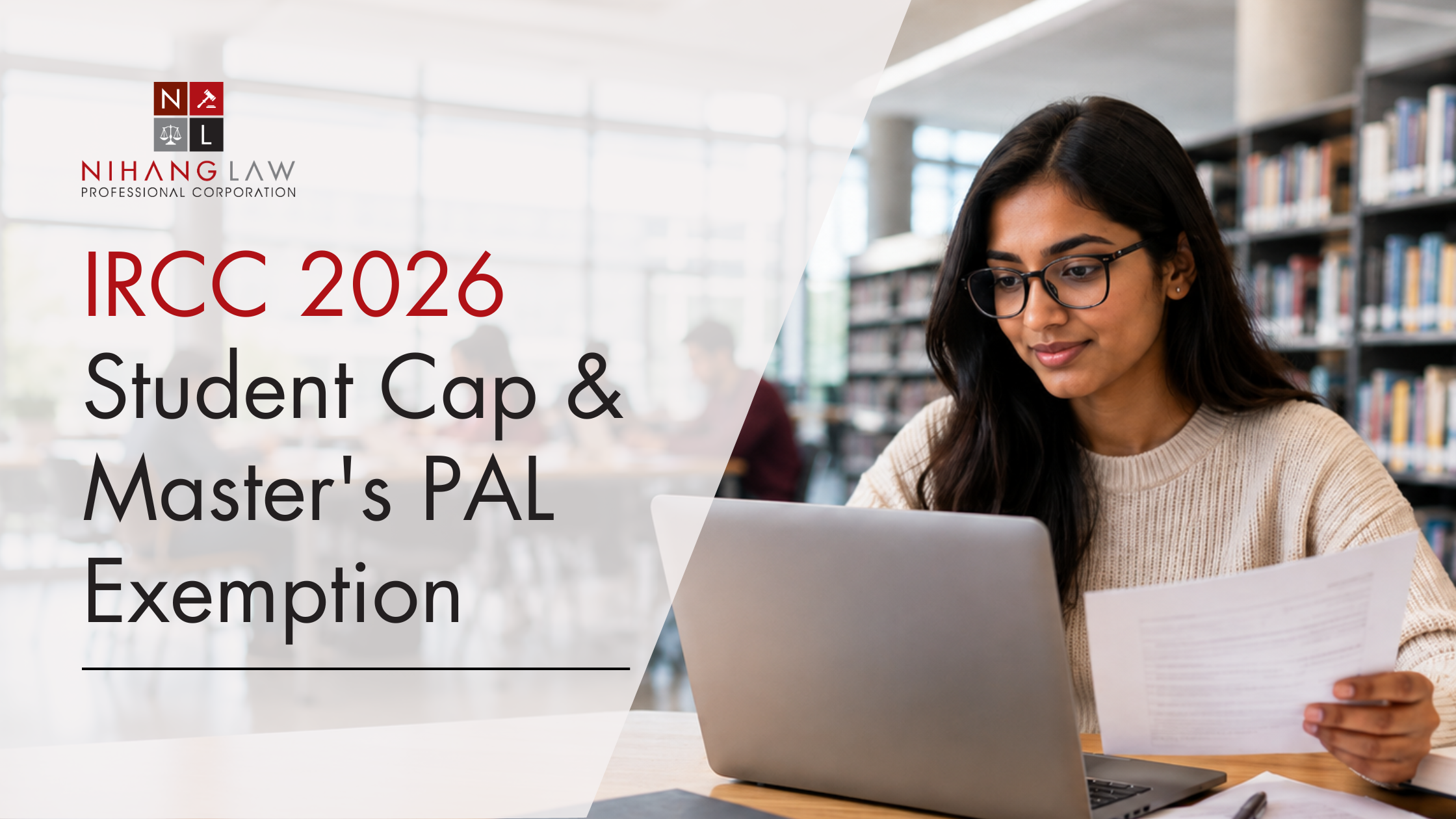
As of January 1, 2026, Master’s and PhD students admitted to degree-granting programs at public Designated Learning Institutions (DLIs) in Canada do not need a Provincial Attestation Letter (PAL) to apply for a Canadian study permit.
This exemption applies to applications submitted on or after January 1, 2026. Applications submitted before that date must still include a valid PAL, even for graduate programs.
The exemption applies only to public DLIs. Students at private universities, graduate certificate programs, and graduate diploma programs are not exempt — they still require a PAL and fall within provincial allocation caps.
In place of a PAL, graduate-exempt applicants should include a brief Letter of Explanation (LOE) citing their Master’s or doctoral program at a public DLI. The Letter of Acceptance from the institution should clearly state the program level.
PhD applicants applying from outside Canada may benefit from expedited processing of approximately 14 calendar days. Spouses and dependent children applying concurrently may also qualify for this fast-track timeline.
Why This Change Matters for International Students in Ontario
You have just received your acceptance letter to a Master’s program in Ontario — maybe at the University of Toronto, York University, or Toronto Metropolitan University — and one of your first questions is whether you need a Provincial Attestation Letter (PAL) before you can apply for your study permit. The short answer: if you are starting a degree-granting Master’s or PhD program at a public Designated Learning Institution (DLI) and you are applying on or after January 1, 2026, you do not need a PAL.
The PAL was introduced by Immigration, Refugees and Citizenship Canada (IRCC) in 2024 as a quota-control mechanism after the number of international study permit holders in Canada surpassed one million, putting significant strain on housing, healthcare, and other services. The letter confirmed that a student had been assigned one of the province’s allocated spaces before IRCC would process a study permit application. Under the 2026 rules, that requirement has been formally lifted for students in degree-granting graduate programs at public institutions.
This change removes a significant administrative hurdle — and in Ontario, where demand for graduate programs is highest, it means you can move directly from your Letter of Acceptance to your study permit application without waiting for a separate provincial letter. For more detail on our student visa services, visit the Nihang Law immigration team.
Does the PAL Exemption Apply to You? Check Your Situation First
The 2026 PAL exemption for graduate students is clear in principle but has important boundaries. The table below shows exactly who is exempt and who is not, based on IRCC’s Ministerial Instructions effective January 1, 2026.
| ✓ PAL Exempt in 2026 | ✗ PAL Still Required in 2026 |
|---|---|
| Degree-granting Master’s program at a public DLI — applying on or after Jan 1, 2026 | Graduate certificate programs (even if called “graduate”) |
| Degree-granting PhD program at a public DLI — applying on or after Jan 1, 2026 | Graduate diploma programs |
| Existing study permit holder extending at the same DLI, same level of study | Any program at a private Designated Learning Institution |
| Exchange students under an official exchange agreement with a DLI | Undergraduate or college programs |
| Certain Government of Canada priority groups and vulnerable cohorts | Applications submitted before January 1, 2026, regardless of program level |
| K–12 (kindergarten to grade 12) students | Status restoration applications after a lapsed permit (may require additional documentation) |
Nihang Law Professional Corporation
Who Is Exempt from the PAL in 2026?
2026 study permit targets by cohort — Master's and PhD students sit entirely outside the capped system
What the PAL Was — and Why Graduate Students Are Now Exempt
A Provincial Attestation Letter (PAL — a quota-control document issued by the province) was introduced by IRCC in January 2024 after the number of active study permit holders in Canada exceeded one million, straining housing, healthcare, and infrastructure in cities across the country. The PAL confirmed, on behalf of a province, that a specific student had been assigned one of the province’s allocated spots within the federal cap before IRCC would process the study permit application.
In November 2025, IRCC released its 2026 provincial and territorial allocations with an important structural change. For the first time, Master’s and doctoral students at public institutions were placed entirely outside the capped system, with IRCC citing their “unique contributions to Canada’s economic growth and innovation” as the rationale for the exemption. The formal Ministerial Instructions took effect on January 1, 2026.
The 2026 national target is 408,000 study permits in total — 7% below the 2025 target and 16% below the 2024 target. Within that total, 49,000 permits are allocated specifically for Master’s and PhD students at public DLIs, who are entirely exempt from the PAL system. Ontario receives the largest share of PAL-required spaces in the country: 70,074 permits and 104,780 application spaces for undergraduate and college-level applicants. Graduate students in Ontario sit outside those allocation figures entirely.
The practical effect for Master’s and PhD applicants is significant. Before 2026, a student could hold an acceptance letter from a Toronto-area university and still face delays waiting for a PAL to be issued before their study permit application could even be filed. That wait is now removed for degree-granting graduate programs at public institutions.
Nihang Law Professional Corporation
Canada's 2026 Study Permit Cap: National Breakdown
408,000 total permits across four cohorts — graduate students sit outside the PAL-capped system entirely
Step-by-Step: How to Apply for Your Study Permit Without a PAL
Applying for a study permit as a PAL-exempt graduate student follows IRCC’s standard process, with one key difference: you substitute a brief Letter of Explanation for the PAL that most applicants would include. Here is the full sequence for students applying on or after January 1, 2026.
-
1Confirm your institution is a public DLI offering a degree-granting graduate programCheck IRCC’s Designated Learning Institution list at canada.ca. The list specifically identifies public DLIs that offer degree-granting Master’s and doctoral programs. Private institutions and colleges not on that list are not eligible for the exemption.
-
2Accept your offer of admission and pay any required depositMost Ontario universities require an enrolment confirmation and a tuition deposit before issuing the formal Letter of Acceptance that IRCC needs. Complete this step with your institution before moving to the permit application.
-
3Obtain your Letter of Acceptance (LOA) from the institutionThe LOA must clearly state that your program is a degree-granting Master’s or doctoral program at a public DLI. If the letter does not specify this, ask your graduate admissions office to issue a version that does — IRCC processing officers look for this confirmation.
-
4Prepare a Letter of Explanation (LOE) citing the 2026 PAL exemptionSince you are not submitting a PAL, your application package should include a brief LOE explaining that you qualify for the 2026 graduate program exemption under IRCC’s Ministerial Instructions. Many Ontario universities provide a template for this letter — check with your international student office. The LOE is not a guarantee of approval, but omitting it may cause processing delays.
-
5Gather the remaining required documentsYour application package typically includes: a valid passport, biometrics (if applicable), proof of funds meeting IRCC’s 2026 cost-of-living requirement (approximately $22,895 CAD per year, plus tuition and travel — verify the current figure at canada.ca before applying), language test results where required, and any medical examination forms if applicable based on your program length and country of residence. Bank statements must reflect a consistent balance over time, not a single recent deposit.
-
6Submit your study permit application online through IRCC’s secure portalPhD applicants applying from outside Canada may be eligible for expedited processing of approximately 14 calendar days under the 2026 rules. To benefit from this, your spouse and dependent children must apply concurrently in the same submission. Master’s applicants receive standard processing. For a full list of the top reasons study permits get refused in Canada, review Nihang Law’s guide before you submit your application.
Beyond the Study Permit: PGWP, Spousal Work Rights, and Your Path to Permanent Residency
For most Master’s and PhD students coming to Ontario, the study permit is not the destination — it is the first step in a longer immigration journey. The 2026 PAL exemption matters not just because it simplifies the application process, but because it preserves access to a set of post-graduation benefits that sit at the centre of Canada’s immigration strategy for skilled newcomers.
Post-Graduation Work Permit (PGWP)
Master’s graduates from public DLIs may be eligible for a Post-Graduation Work Permit (PGWP) — an open work permit that allows you to work for any employer in Canada after you complete your degree. As of February 15, 2024, Master’s graduates may qualify for a three-year PGWP regardless of the length of the program. This is a significant advantage: a student who completes a one-year Master’s degree may still typically receive a three-year work authorization.
Equally important, degree-level graduates — Bachelor’s, Master’s, and PhD — are exempt from the PGWP field-of-study eligibility requirements that apply to college certificate and diploma graduates. Students in non-degree programs must show their program aligns with specific in-demand occupations on a government list; degree holders do not face this restriction.
Spousal Open Work Permit
While you complete your degree, your spouse or common-law partner may be eligible for a Spousal Open Work Permit (SOWP) that allows them to work for any employer in Canada. This is a meaningful financial benefit for newcomer families settling in Scarborough, North York, Brampton, or elsewhere in the GTA — it means both partners can work and contribute while the student completes their program. For current SOWP eligibility requirements, see Nihang Law’s guide to Spousal Open Work Permit eligibility in Canada.
Express Entry and the Path to Permanent Residency
Canadian work experience gained on the PGWP earns Comprehensive Ranking System (CRS) points under the Canadian Experience Class (CEC) stream of Express Entry. This work experience, combined with the education and language points from a Canadian Master’s degree, can create a strong Express Entry profile. Many Master’s graduates in the GTA use this pathway to apply for permanent residence. For a full overview of Express Entry and Canada’s immigration pathway, the Nihang Law immigration team is available to help. CRS scores and draw thresholds fluctuate, so outcomes may vary and individual eligibility should be assessed with a licensed immigration lawyer.
Nihang Law Professional Corporation
The Study-to-PR Pipeline for Master's Graduates in Ontario
How a PAL-exempt study permit leads to permanent residency via PGWP & Express Entry
for Master's / PhD
at public DLI
permit for Master's
No field-of-study restriction
CLB / NCLC 7+
for CEC eligibility
Class (CEC)
CRS-based ITA
PR status
confirmed
while student studies
for own EE profile
⚠ CRS scores and draw thresholds vary per draw. PR outcomes may differ based on individual profile, language scores, age, and other factors. Consult a licensed immigration lawyer for personalized guidance.
Common Mistakes That Can Delay or Derail Your Study Permit
The PAL exemption simplifies the process, but it does not make the study permit application automatic. These are the most common errors that cause delays, requests for additional information, or outright refusals for graduate applicants under the 2026 rules.
-
⚠
Assuming all graduate programs are exempt Graduate certificates and graduate diplomas are not degree-granting programs and remain subject to the PAL requirement and provincial allocation caps, regardless of the word “graduate” in the program title. Only degree-granting Master’s and PhD programs at public DLIs qualify.
-
⚠
Applying before January 1, 2026 without a PAL The exemption is application-date specific. If your application was submitted before January 1, 2026, a valid PAL was required regardless of your program level. The graduate program exemption does not apply retroactively to earlier submissions.
-
⚠
Attending a private DLI and assuming the exemption applies The 2026 exemption is strictly limited to public Designated Learning Institutions. Students at private universities and private-public college partnership programs remain subject to PAL requirements. Confirm your institution’s public status on IRCC’s DLI list before you apply.
-
⚠
Omitting the Letter of Explanation Exempt applicants do not submit a PAL, but without a brief LOE citing the graduate program exemption, a processing officer may flag the application as incomplete or request additional documentation, adding weeks of delay.
-
⚠
Submitting proof of funds that does not meet IRCC’s 2026 benchmark IRCC’s 2026 living-cost requirement is approximately $22,895 CAD per year, plus tuition and travel. Bank statements must show a consistent balance over time — a single large deposit made shortly before the application is a common red flag for processing officers.
-
⚠
PhD applicants not applying with family members concurrently The approximately 14-day expedited processing window for doctoral applicants requires the principal applicant and their spouse or dependent children to apply at the same time. Family members who apply separately after the initial submission will receive standard processing times and will not benefit from the expedited timeline.
-
⚠
Misunderstanding restoration of status after a lapsed permit If a study permit expires and you apply for restoration of student status, the 2026 graduate PAL exemption may not apply in the same way as it does to a new application. Restoration of status can involve different documentation requirements under the Immigration and Refugee Protection Regulations. If your permit has lapsed, see Nihang Law’s guide on what to do if your study permit expires or lapses, and speak with a licensed lawyer before re-applying.
If Your Study Permit Is Refused Despite the Exemption
A study permit refusal does not end your options. The PAL exemption removes one administrative barrier, but IRCC officers can still refuse a study permit application for a range of other reasons: insufficient proof of funds, weak demonstration of ties to your home country, incomplete documentation, prior immigration history, or officer discretion under the Immigration and Refugee Protection Act (IRPA).
When a study permit is refused, you have two main paths. The first is to reapply with a strengthened file that directly addresses the reasons stated in the refusal letter. The second, where the refusal was procedurally unfair or unreasonable — for example, where an officer ignored key evidence or made a legal error — is to seek a judicial review at the Federal Court of Canada. A judicial review does not re-decide the application, but it may result in the decision being sent back to IRCC for a fresh assessment.
If you have received a refusal, a licensed immigration lawyer can review your refusal letter, assess whether reapplication or judicial review of a refused study permit is the stronger path, and help you prepare the most credible response. Do not assume a refusal is final.
Nihang Law Professional Corporation
Canada Study Permit Cap: 2024 vs. 2025 vs. 2026
The cap has fallen 16% from 2024 to 2026 — making application quality more important than ever
Frequently Asked Questions About the 2026 PAL Exemption
Do Master’s students need a PAL to apply for a Canadian study permit in 2026?
What do I submit instead of a PAL if I am a Master’s or PhD student in 2026?
Does the PAL exemption apply to graduate diploma and graduate certificate programs?
How do I know if my Ontario university is a public DLI for the purposes of the 2026 exemption?
Can my spouse work in Canada while I study on a Master’s or PhD study permit?
How long does it take to process a PhD study permit in 2026?
What happens if my study permit application is refused even though I am PAL-exempt?
After I graduate from my Master’s program in Canada, how long can I work on a PGWP?
Speak with an Ontario Immigration Lawyer Before You Apply
The 2026 PAL exemption is a genuine and meaningful improvement for Master’s and PhD students in Ontario. It removes a significant administrative hurdle and lets you move from your acceptance letter to your study permit application without waiting for a provincial quota document. That said, a study permit application still needs to be complete, credible, and carefully prepared. IRCC officers exercise broad discretion, and a file that is technically correct but poorly documented can still result in a refusal.
Qasim Ali, Principal Lawyer at Nihang Law Professional Corporation, works with international students and newcomer families across Toronto, Scarborough, and the GTA to prepare study permit applications, respond to refusals, and plan the full immigration pathway from study permit to permanent residency. If you have questions about your application or your options, Nihang Law can help.
If you are planning a study permit application, or if you have received a refusal and want to understand your options, our immigration team is here to help. Book a consultation with Nihang Law today.
Contact Nihang Law
About the author
Qasim Ali
Principal Lawyer · Nihang Law Professional Corporation · Toronto & Scarborough, Ontario · Law Society of Ontario
Qasim Ali is the Principal Lawyer at Nihang Law Professional Corporation, serving clients across Toronto, Scarborough, and the broader Greater Toronto Area. He provides full-service legal representation across immigration, real estate, family law, criminal law, civil litigation, employment law, wills and estates, and business law.
Nihang Law is particularly recognized for its depth in immigration and real estate law — a combination that serves newcomers and growing families navigating both legal systems simultaneously.
Learn more about Qasim Ali →Sources & References
- IRCC — 2026 Provincial and Territorial Allocations Under the International Student Cap: canada.ca
- IRCC — Designated Learning Institutions List: canada.ca
- IRCC — Study Permit: Graduate Students (2026 guidance): canada.ca
- IRCC — Post-Graduation Work Permit: canada.ca
- IRCC — Express Entry: Canadian Experience Class: canada.ca
- IRCC — Cost of Living Requirements: canada.ca
- Immigration and Refugee Protection Act, S.C. 2001, c. 27: laws-lois.justice.gc.ca
- Immigration and Refugee Protection Regulations, SOR/2002-227 — Restoration of status (s. 182): laws-lois.justice.gc.ca
- Law Society of Ontario — Find a Lawyer: lso.ca
Thank you for reading this post, don't forget to subscribe!