



13th March 2026BY Qasim Nihang
No Partnership Agreement in Ontario? What Happens When Business Partners Fall Out
A partnership in Ontario can exist even if no agreement was ever signed, because the law looks at whether two or more people carried on business in common with a view to profit and at what they actually did in practice. If there is no written agreement, the Ontario Partnerships Act often supplies default rules, including equal sharing of capital, profits, and losses, equal management rights, no automatic right to salary for acting in the business, and no power to expel a partner unless there is express agreement.
A partner in a partnership of no fixed term may end it by notice, and the court may also dissolve a partnership on statutory grounds, including where it is just and equitable to do so. Delay can be costly, because general partners may face personal exposure for partnership debts and Ontario limitation periods may begin running once the claim is discovered.
Last updated: March 2026
Many Ontario businesses begin with trust, not paperwork. Two friends open a shop together. Siblings start a side business. A couple shares profits informally. For a while, that may feel efficient. The problem usually appears later, when the money gets tighter, one person believes they contributed more, someone starts taking cash or clients on the side, or one partner changes the passwords and claims the business is solely theirs. At that stage, the missing agreement is not a minor administrative gap. It becomes the centre of the dispute.
The good news is that the law does not treat silence as a vacuum. In Ontario, an unwritten partnership can still be a real partnership, and if no formal agreement exists, statutory default rules may step in. The immediate legal questions usually become: was there a partnership, what assets belong to it, who can control operations, and how does one side exit without making the case worse?
If you are already dealing with a live partnership dispute in Ontario, early legal guidance may help you protect records, assess leverage, and avoid making the breakup harder to unwind.
Quick Start: Pick Your Path
I think we had a partnership, but nothing was signed.
- Focus first on proving the relationship through conduct, profit-sharing, and the business paper trail.
My partner locked me out or froze me out.
- Preserve records immediately and do not assume the other side can lawfully remove you.
We are fighting about who owns the assets.
- Separate personal property from partnership property before money or inventory disappears.
I think my partner diverted money, customers, or opportunities.
- An accounting and tracing exercise may matter more than arguments about fairness.
I just want out.
- The exit route depends on whether the business had a fixed term, whether dissolution by notice is available, and whether court intervention is needed.
Can A Partnership Exist In Ontario Without A Written Agreement?
A written contract is not required for an Ontario partnership to exist. The real question is whether the parties carried on business in common with a view to profit, and courts look beyond labels to the objective record and surrounding facts.
Ontario’s statute defines a partnership as the relation between persons carrying on a business in common with a view to profit. Guidance summarizing partnership principles also confirms that a partnership may arise by verbal agreement, written agreement, or the conduct of the parties, and that the inquiry turns on objective evidence and what the parties actually did.
That matters because many disputes are really threshold disputes. One side says, “We were just splitting revenue.” The other says, “We were partners.” In practice, the analysis often turns on the business paper trail: who controlled operations, who shared profits, who dealt with third parties, how the business held itself out, and whether the parties acted for a common commercial purpose. Ontario law does not require a polished agreement before partnership consequences can attach.
Another point many founders miss is that a general partnership is not usually treated as a separate legal person distinct from its members in the ordinary partnership-law sense, and partners may be personally exposed for firm debts incurred while they are partners. That is one reason partnership disputes escalate so quickly once creditors, leases, tax arrears, or unpaid suppliers enter the picture.
Nihang Law Insight
In early-stage disputes, parties often spend too much time arguing about feelings and not enough time gathering proof. In an unwritten partnership case, the operational record usually matters more than the story each side tells about how things were supposed to work.
What Default Rules Apply When There is No Partnership Agreement in Ontario?
If there is no enforceable agreement saying otherwise, Ontario’s default partnership rules can fill the gap. Those default rules often include equal sharing of capital, profits, and losses, equal participation in management, no automatic salary for acting in the business, unanimous consent for adding a partner, and majority rule only for ordinary business matters.
The starting point is not what seems fair after the fallout. It is what the statute supplies by default, subject to proof of some different express or implied bargain. In some cases, the dispute may also overlap with broader contract disputes about side agreements, oral promises, payment obligations, or how the business was supposed to operate.
That can surprise business owners who assumed a 70/30 reality would be obvious, only to find that the evidence does not clearly displace the statute’s equal-sharing baseline.
Issue | Default rule if no written agreement | Practical consequence |
Profit and loss sharing | Equal sharing | A partner |
Management | Every partner | One partner |
Pay for working in the business | No automatic | Draws and |
Adding a new partner | Requires | A new investor |
Ordinary operational disputes | Majority may | Day-to-day |
Fundamental changes | Change in the | Major pivots |
Expulsion | No majority | A lockout or |
Can My Business Partner Push Me Out Of The Business In Ontario?
Usually, no partner can simply expel another partner by majority vote unless the partners expressly agreed to that power. On the other hand, where the partnership has no fixed term, a partner may be able to determine the partnership by giving notice, and the court may also dissolve the partnership on statutory grounds.
The expulsion point is critical. Ontario’s statute says no majority of the partners can expel any partner unless that power has been conferred by express agreement. Ontario appellate case commentary has also emphasized that partnership expulsion powers are treated seriously and informed by duties of good faith and full information.
Can a Partner Dissolve a Partnership by Notice in Ontario?
By contrast, if the partnership is one of no fixed duration, the Act provides an exit route by notice. That does not solve every problem, because dissolution is only the beginning of the unwind. The harder fight is often what happens next: valuation, debts, unfinished contracts, client lists, goodwill, receivables, and access to records.
Court dissolution is another option in the right case. The statutory grounds include circumstances where the business can only be carried on at a loss and situations where it is just and equitable to dissolve the partnership. That is often the legal language used when a relationship has become commercially unworkable.
Nihang Law Insight
Locking a partner out of systems, bank access, or premises before the records are preserved often turns a manageable commercial dispute into an urgent litigation problem. Even where the relationship is over, the unwind still has to be handled lawfully.
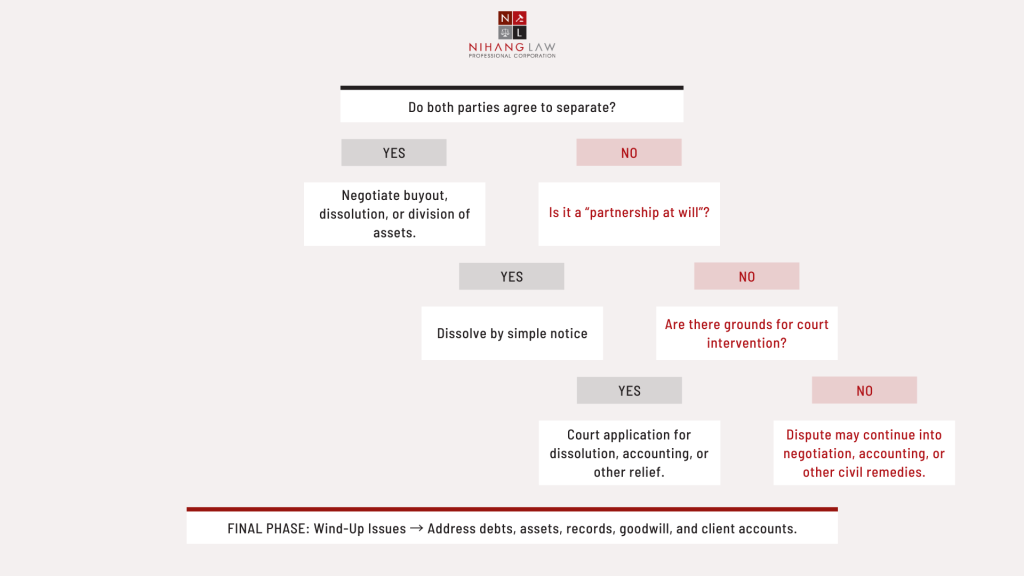
Figure 1: How a Partnership Dispute May Be Resolved or Dissolved in Ontario
Are Profits Shared Equally If There Is No Partnership Agreement In Ontario?
The fight is rarely only about the business in the abstract. Ontario partnership law focuses on what counts as partnership property, whether each partner has provided full information, and whether one partner improperly took benefits, profits, or competing opportunities without consent.
Ontario’s statute says property originally brought into the partnership stock, or acquired on account of the firm or for the purposes and in the course of the partnership business, is partnership property and must be held and applied for partnership purposes. So an asset being in one person’s name does not automatically end the inquiry. The real question is often why it was acquired and for whose business it was being used.
The statute also requires partners to render true accounts and full information about matters affecting the partnership. It addresses accountability for private profits and imposes a duty not to compete with the firm without the other partners’ consent. In plain language, a partner usually cannot quietly siphon value out of the business and then insist the dispute is only about management style.
This is why many partnership disputes are really accounting disputes. Where one side alleges unpaid draws, diverted receivables, or money owing after the breakup, the dispute may also turn into a debt recovery issue.
Before anyone can sensibly negotiate exit terms, the parties often need a clean picture of receivables, expenses, draws, inventory, contracts, tax liabilities, equipment, and any benefits one partner may have taken personally.
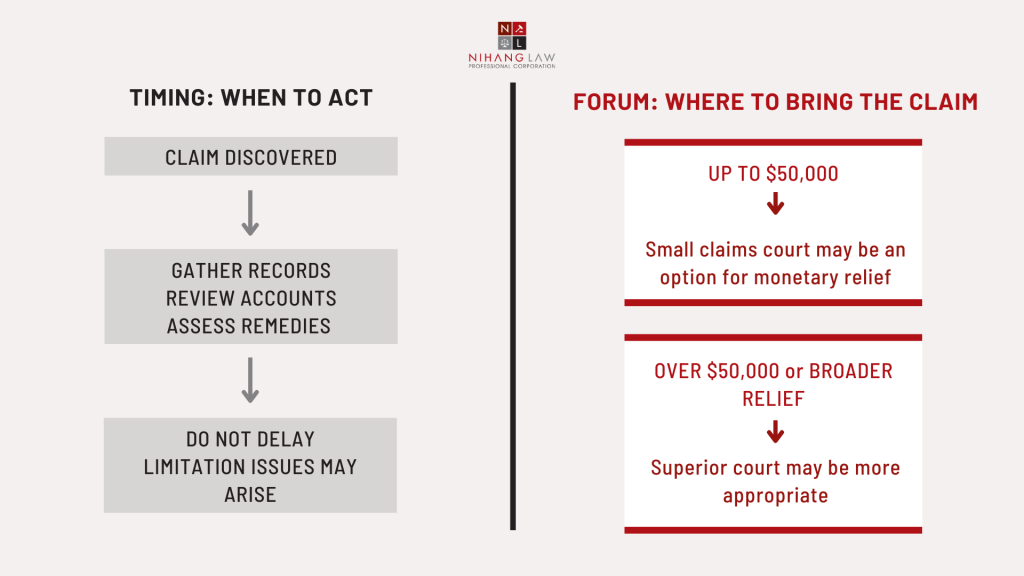
Figure 2: When to Act and Where to Bring the Claim in Ontario
How Do You Dissolve a Partnership in Ontario When the Relationship Breaks Down?
The practical path usually starts with stabilization, evidence preservation, and a clear decision about whether the goal is continued operation, negotiated separation, or dissolution. From there, the dispute normally moves through accounting, demand, negotiation, and, if needed, court proceedings brought within Ontario’s limitation period.
Step-by-Step Roadmap
- Preserve the record. Secure financial statements, bank access history, accounting exports, tax filings, contracts, invoices, payroll information, correspondence, and any documents showing how profits or losses were handled.
- Identify the real issue. Decide whether the first fight is about partnership status, control, money, property, or exit. Different problems call for different remedies.
- Map the assets and liabilities. List what may be partnership property, what appears personal, what debts are outstanding, and what obligations to suppliers, landlords, lenders, or tax authorities still exist.
- Demand disclosure and an accounting where appropriate. If one partner controlled the books, full information and accounting are often the first meaningful forms of relief.
Try a structured business exit if possible. A negotiated buyout, agreed dissolution, or sale process is often cheaper than litigating an unwritten relationship from scratch, and in some cases alternative dispute resolution may help the parties reach a workable outcome without immediately moving into full court litigation.
- Move quickly if litigation is needed. Ontario’s basic limitation period is generally two years from discovery of the claim, and Small Claims Court currently has a $50,000 monetary jurisdiction. Larger or more complex civil proceedings are generally governed by the Rules of Civil Procedure in the Superior Court of Justice.
Nihang Law Insight
We often see parties say they are still trying to work it out and then wait too long. In partnership breakups, the limitation clock, missing records, and shifting money can all make delay much more expensive.
Common Mistakes
Most unwritten-partnership disputes get worse because the parties assume the law will simply mirror their informal expectations. The first legal mistake is usually failing to document the facts that show what the relationship really was.
- Assuming no written agreement means no partnership.
- Treating shared profits as casual compensation without documenting the real arrangement.
- Locking out a partner before preserving books and financial records.
- Mixing personal and business assets so badly that ownership becomes harder to prove.
- Ignoring side deals, diverted clients, or undisclosed benefits until months later.
- Waiting too long to assess limitation issues.
- Focusing on blame before identifying the right commercial outcome.
Frequently Asked Questions
Can an Ontario partnership exist without a written agreement?
Yes. A partnership may exist without a written agreement if the parties carried on business in common with a view to profit. The court will look at the objective record, surrounding facts, and what the parties actually did, not just whether they signed a formal document labeled partnership agreement.
If we never discussed percentages, are profits automatically split equally?
Often, yes, as a default rule. If there is no enforceable agreement proving a different arrangement, Ontario’s default rules generally provide for equal sharing of capital and profits and equal contribution to losses. The person arguing for a different split usually needs evidence that displaces that default position.
Can my business partner just remove me from the business?
Usually not by majority vote alone. Ontario’s statute says no majority of partners can expel a partner unless that power was conferred by express agreement. In many unwritten-partnership disputes, a lockout may escalate the legal problem rather than solve it.
Do I have a right to see the books?
Partners are generally entitled to true accounts and full information about matters affecting the partnership. If one partner controlled the finances, records, or payment systems, a demand for disclosure and accounting is often a central part of resolving the dispute.
What if a major asset is in my partner’s personal name?
That does not end the issue. Ontario law treats property acquired for the purposes of the partnership business or on account of the firm as partnership property. The legal analysis often turns on the purpose of the acquisition and how the asset was actually used in the business.
Can one partner start a competing business and keep the profits?
Not typically without risk. Ontario’s statute addresses accountability for private profits and includes a duty not to compete with the firm without consent. If a partner diverted business opportunities or ran a competing operation, an accounting remedy may become important.
How long do I have to sue in Ontario?
In many cases, the basic limitation period is two years from the day the claim was discovered. Determining discoverability can be fact-specific, so parties should assess timing early rather than assume the clock has not started.
Can we dissolve the partnership without going to court?
Sometimes, yes. Where there is no fixed term, a partner may determine the partnership by notice, and alternative dispute resolution may help resolve valuation, accounting, or exit issues without immediately starting full court litigation. If there is deadlock or serious unfairness, court dissolution may still be necessary.
Key Takeaways and How Nihang Law Can Help
When a business partnership turns sour without a formal agreement, the dispute does not begin from zero. Ontario law may still recognize the partnership, and the Partnerships Act may supply default rules on profit sharing, management, expulsion, disclosure, property, and dissolution. The real work is usually factual: proving what the relationship actually was, protecting the records, and deciding whether the right solution is an accounting, negotiated exit, or court-driven wind-up.
If you are facing a lockout, profit dispute, asset fight, or deadlock with a business partner in Ontario, Nihang Law’s litigation team can help you assess whether a partnership existed, what default rules may apply, and what practical next step may best protect your position.
Reminder: Partnership disputes are intensely fact-dependent. Early legal review is often most useful before records disappear, the other side reframes the relationship, or the limitation period becomes an issue.
Sources and References
Ontario Partnerships Act
https://www.ontario.ca/laws/statute/90p05
Ontario Limitations Act, 2002
https://www.ontario.ca/laws/statute/02l24
O Reg. 626/00: Small Claims Court Jurisdiction
https://www.ontario.ca/laws/regulation/000626
O Reg. 42/25 amending Small Claims Court jurisdiction and appeal limit
https://www.ontario.ca/laws/regulation/r25042
Backman v. Canada, 2001 SCC 10
https://decisions.scc-csc.ca/scc-csc/scc-csc/en/item/1846/index.do
Continental Bank Leasing Corp. v. Canada, 1998 CanLII 794 (SCC)
https://www.canlii.org/en/ca/scc/doc/1998/1998canlii794/1998canlii794.html
CRA: Determining the Existence of a Partnership
https://www.canada.ca/en/revenue-agency/services/forms-publications/publications/14-9-1/partnerships-determining-existence-of-a-partnership.html
CRA: What is a Partnership? Income Tax Folio S4-F16-C1
https://www.canada.ca/en/revenue-agency/services/tax/technical-information/income-tax/income-tax-folios-index/series-4-businesses/series-4-businesses-folio-16-partnerships/income-tax-folio-s4-f16-c1-what-a-partnership.html
Ontario Court of Appeal summary: Tim Ludwig Professional Corporation v. BDO Canada LLP, 2017 ONCA 292
https://canliiconnects.org/en/summaries/45396
Ontario Rules of Civil Procedure
https://www.ontario.ca/laws/regulation/900194
Ontario civil claims: simplified procedure
https://www.ontario.ca/page/civil-claims-simplified-procedure
Thank you for reading this post, don't forget to subscribe!